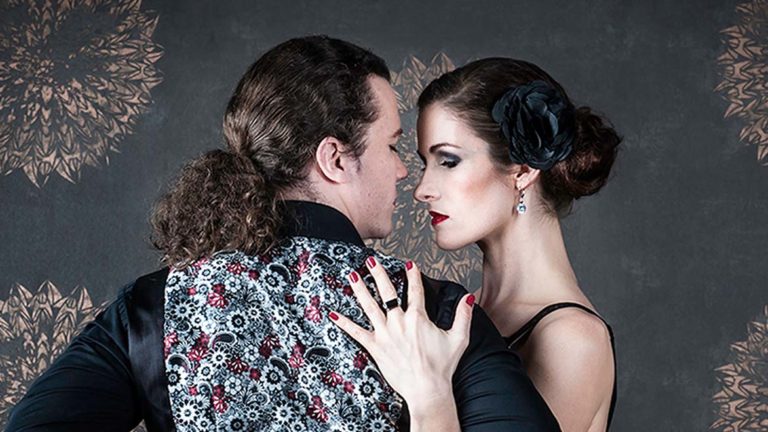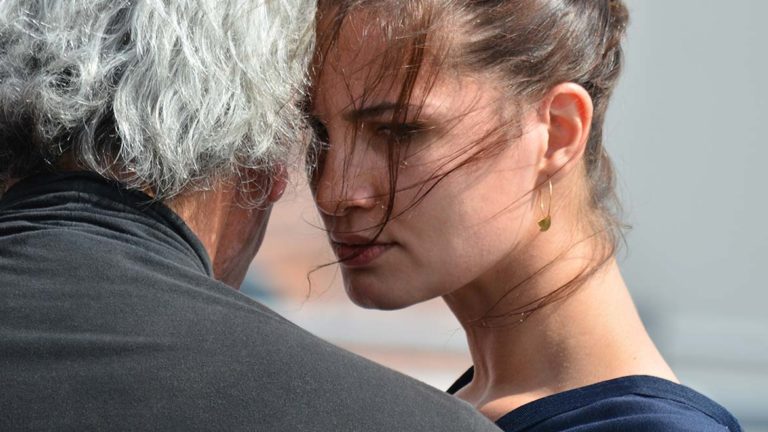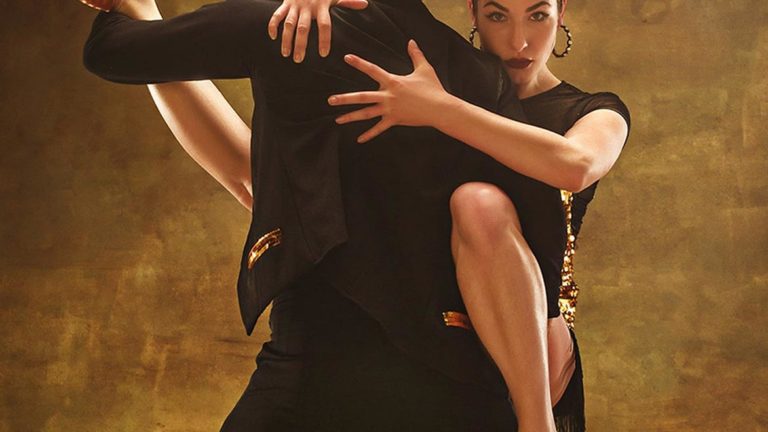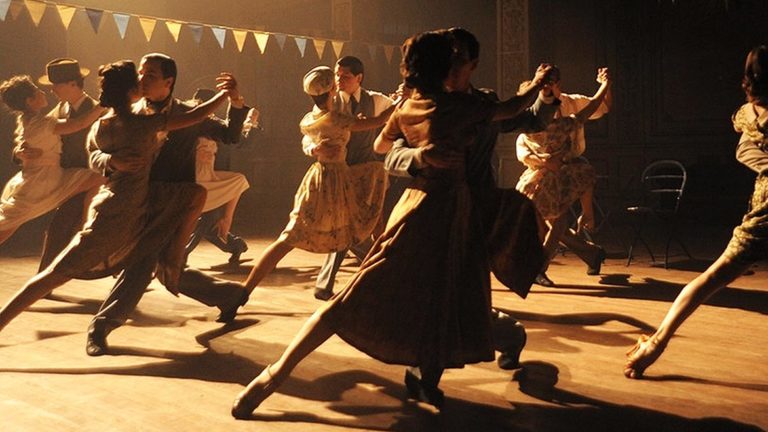


Learning to dance tango is a great goal. But how do you find a good tango school or the right tango teacher? One tip is to watch dance videos from different teachers or teacher couples. If you like the teacher’s dance style, that’s already a good starting point. Then, of course, you also need to consider their teaching skills—and ultimately the personal chemistry!
To begin with: A good tango school!
What can you expect from a good tango school? From the very start, it should focus on teaching students a solid basic technique. This is an important prerequisite for the ability to improvise freely—and thus for enjoying learning to dance! It doesn’t come down to a collection of “figures” or “steps,” but rather to understanding the tango’s body language, which is internationally understood. Elegant, sensual musical walking in a close embrace is one of the fundamentals.

A good tango teacher understands each student. Important: Even individual women or men should be able to sign up for lessons—most tango schools match dance partners for singles. You don’t need a fixed partner to learn to dance tango!
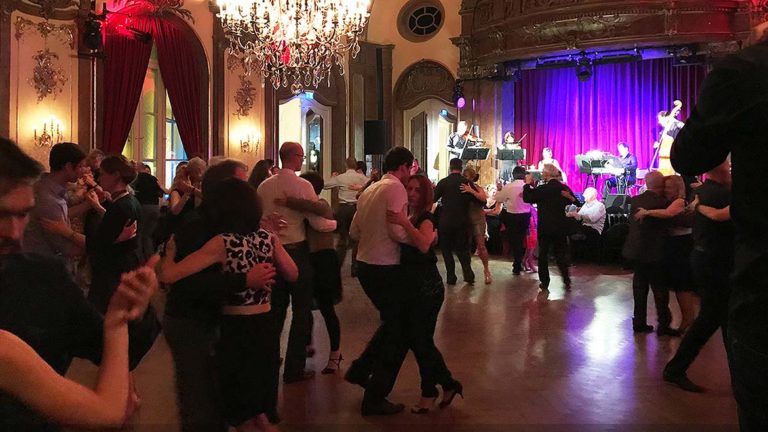
In a good tango school, “social dancing” is trained from the very beginning as well, so that tango newcomers can quickly feel at home on the dance floor of a milonga—that is, a tango dance party. Learning to dance tango is fun!
Learn tango for every level
What options are there for learning to dance Argentine Tango? Tango classes, tango workshops, or private lessons are offered, where you’ll get to know the elements of the dance. No matter what age, even without any dance experience—anyone who can walk can learn to dance Argentine Tango! If you think you’re unmusical or “have two left feet”: musicality and a sense of rhythm can be trained, because every person has the natural ability for it! The only prerequisites are openness and a bit of patience.
In a tango course, you learn not only how to dance step sequences, but also how to develop body awareness so you can dance relaxed, enjoyfully, and musically. From the beginning, special importance should be placed on the basic character of Argentine Tango: improvisation, leading and following. There shouldn’t be a fixed, pre-set program—so everyone can learn to dance at their own pace!
The learning levels (also: levels) of most tango schools are divided into beginners (level 1), intermediate (level 2), and advanced (level 3).
Looking for a dance partner?
Do you still need a dance partner? Good tango schools are happy to arrange so-called “springers” (usually more experienced dancers). Do you already have tango experience and maybe aren’t sure which course is right for you? Contact your tango school ahead of time to clarify it!
If something doesn’t work out right away, you can ask questions or request a repetition. Good tango teachers respond sensitively to every participant, analyze problems, and even practice with their students from time to time. The atmosphere should be relaxed, because even if learning to dance tango initially involves work, it should above all be enjoyable!
You’ll also learn a few Argentine technical terms for tango dance steps (more info in our tango lexicon). Over time, you’ll also discover the musical styles from different eras of tango history—and how you can interpret them individually.

At milongas (tango parties) organized by most tango schools, you can put what you learned in class into practice and dance to selected tango music in a lively atmosphere.
Learning to dance tango is fun!
In tango classes or workshops, you usually practice in pairs. After basic exercises on posture, balance, and walking—especially important in tango—the focus shifts to the course topic. Most often, the different movement sequences for man and woman (or for the leader and the follower) are first practiced separately, and then together as a pair.
To develop a feel for communication within the couple, it’s highly recommended to dance with different partners. In the course, partner changes are often requested, because it makes learning to dance easier.
Popular tango schools
Tango schools in Munich
- Tango Maldito
- Vivetango
- Tango Lugo
- DNA Tango
- Lo de Laura
- Tango Anabella
- Tangozentrum
- Tango Connection
- Tango Sur Team
- Tango genial
- El Farolito
- Tango Papusa
Tango schools in Hamburg
- Alma Tango
- Alto Tango
- Tangostudio El Abrazo
- Baladin Tango
- La Yumba
Tango schools in Cologne
- Don Tango Club
- Tango Köln – Ricardo & Raquel
- Tangokultur Köln
- Vida Mia
Tango schools in Berlin
- Nou Tango Berlin
- Tangotanzen macht schön – Susanne Opitz and Rafael Busch
- Nou Tango Berlin
- Mala Junta
- Tango-Raum
- Tango Vivo Tanzstudio
Learn tango while traveling
Another effective and fun way to learn to dance is tango trips to Buenos Aires or to other beautiful places …
For example tango vacation in Italy in Villa La Rogaia: Tango and Dolce Vita. Tango vacations with internationally renowned teachers in a romantic country house in Umbria.
Tango La Berlinesa offers tango trips to the most beautiful destinations in Europe and South Africa.
The well-known Berlin tango school Tangotanzen macht schön has been organizing tango holiday trips for many years.
What learning levels are there?
What do you learn in a tango beginners’ course?
Learning to dance tango in a beginners’ course, or at level 1, first means practicing elegant walking and the correct step technique. In tango, it’s not only a matter of styling—these skills are part of the basic technique that makes improvising and shaping complex figure sequences possible in the first place. In the beginner tango course, you’ll be shown in detail the technique of weight shifting, how to perceive the standing and playing leg, as well as an elegant foot technique and exercises for stable balance.
Posture and embrace
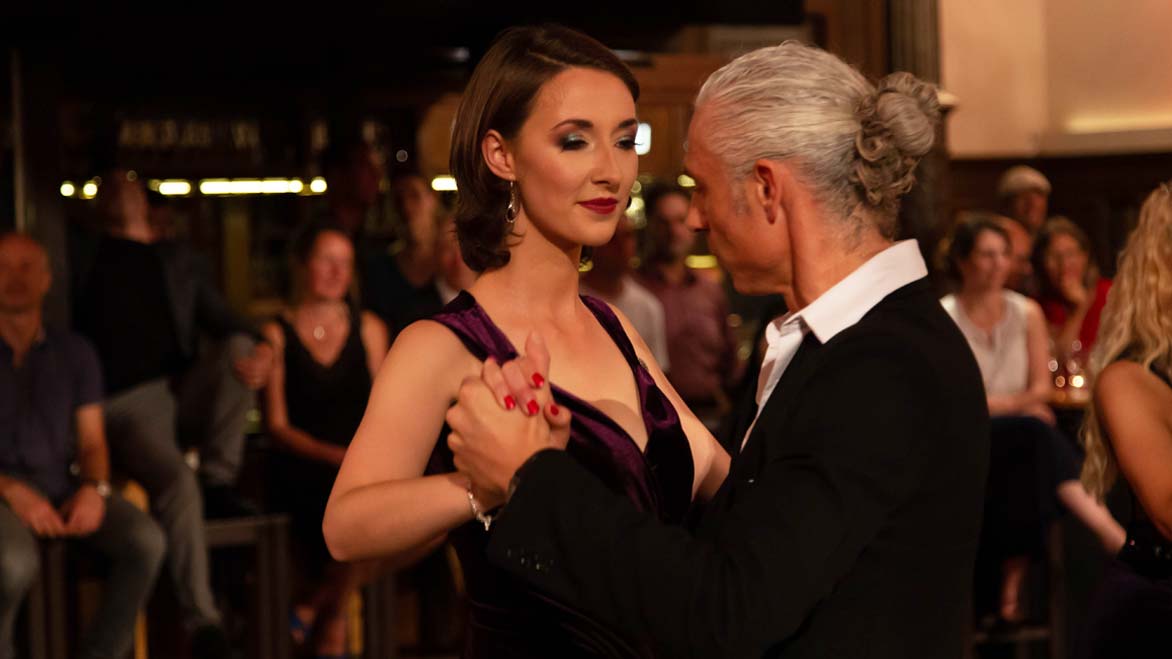
You dance tango elegantly, with the core idea of embracing—Postura y Abrazo. In the beginner tango course, you’ll learn what your body posture should be so you can dance with contact in a close embrace. This includes an open and upright posture, a rounded, feeling-filled, and lively embrace, and a good, secure sense of standing centered on your axis.
Basic step—simple and yet refined
Tango is an improvisation dance. Every step and every figure is led spontaneously by the man (or leader) using only body signals, while the woman (or follower) follows the lead and, in her own way, helps to shape tango actively and creatively. Still, tango has a basic step—the so-called Paso Basico—that most teachers teach their tango students to provide at least a structure when learning to dance.

Learning to Dance in a Close Embrace Dancing in the Master Class Even kids can learn to dance the tango!


Ocho – The Eight in Tango
Among the basic figures in the beginner tango course is el Ocho—the ocho, the eight. With the feet, the shape of an eight is “drawn” on the floor. Ochos consist of steps and turns—pivots that are danced forward or backward.
Simple figures—now you can get started!
With these basic figures, you’ll now move on to improvisation. The teacher helps you combine simple figures. Small turns—Giros, a Parada for the woman, where she has time to delight the man with elegant embellishments, or a “sandwich”—Sanguchito, where your partner’s foot is gently caught between your own feet. That way, you’ll be ready to try a few steps on the dance floor of a Milonga even after your first experiences learning to dance!
Learning to dance tango by level—the intermediate stage
Intensive learning: this is what awaits you at the intermediate level—also called level or level 2. You’re in the right place if you’ve completed at least one beginner course, because you build on the basics already taught there. Usually, 1 to 2 years of dancing experience or many tango kilometers on your feet are expected. Topics include, for example, changes of direction, the sway—Cunita, the feint—Amague, figures in the crossed system, Ocho Cortado, Parada, Calecita—all steps that offer plenty of room for improvisation, are fun, and are very important for handling other couples on the dance floor of a Milonga harmoniously and confidently. Here you’ll also learn one of the most important tango figures for learning to dance tango: the Molinete, a turn in which the couple moves around each other.
Dynamics and rhythm
Because this figure is one of the foundations for improvisation, most schools focus more closely on its technique and execution and teach it to you in both directions. After that, you incorporate Sacadas, which means that the man or woman steps into the partner’s track and thus takes over that person’s previous position. You’ll learn how to deal with the dynamics and rhythm of these figures, focus precisely on the role of the leader and the follower, and practice how to dance the steps you’ve already learned and the new figures through improvisation.

More refinement
New figure sequences are combined with what you already know. The Parada—the “magic time” for the woman, to “seduce” the man, and also vice versa—is examined in detail. You learn embellishments, for example Saludos, Caricias, Adornos, so you can fully enjoy this figure with refined movement possibilities. You’ll also learn tango step sequences you haven’t encountered yet: the Barrida—the sweeping step, Voleos, and Ganchos, forward and backward sacadas for both man and woman, Planeos, where mastery of the playing leg is perfected.
Tango Nuevo elements
With Soltadas—here the dance posture is dissolved, with unusual changes of direction, Volcadas and Colgadas—which temporarily lift your axis and let you play with centrifugal force—you’ll learn figures from the Tango Nuevo repertoire. All sequences are prepared so that you can also dance them on the dance floor. You’ll learn what you need to pay attention to so you don’t disturb the flow of a milonga even when the dance floor is full, while staying confident.
Learning to dance tango for advanced dancers
In a course for advanced dancers or level 3, all tango dancers with about 3 years of dancing experience and lots of practice on milongas are in the right place. Some tango schools use the labels “beginner—intermediate—advanced,” others use “level” or “level,” usually from 1 to 3. The highest level is sometimes also referred to as “masterclass.”
Complex figures
Some figures in such a course are already known from the previous learning levels. In the advanced classes, the difficulty level in the execution of these step sequences increases. You’ll learn to dance complex tango Argentino figure combinations that connect elements from several simpler steps with each other.
Freedom of improvisation—the masterclass
Together with you, the teachers refine your technique from head to toe! You’ll learn how to become good and elegant Milongueros—that is, tango dancers at a milonga (public dance event)—through a functional body posture and a conscious approach to your step technique.
The result of this work is developing your personal style and discovering your own figure combinations. Through a dialogue with your dance partner, you’ll reach that pleasurable freedom in improvisation that is considered the essence of tango.
Info: What types of lessons are there?
Tango courses—varied and effective
Tango courses normally consist of multiple units that build on each other. Here you work on technique, tango embrace, and various figures, with which you can build and enrich your improvisation repertoire. At most schools, you can join at any time. Sometimes there are also introductory single sessions or “open” courses that don’t build on each other.
Workshops—intensive and compact
In addition to tango courses, workshops are offered with special tango topics. Workshops are usually individual events and focus intensely on one particular subject, so you achieve rapid progress in learning to dance in a very short time.
Private lessons—tailored training
For especially clear progress—why not hire a “Personal Tango Trainer”? In private one-on-one lessons, tango teachers can specifically address your personal needs. No matter what level you want to learn at, whether you’re a beginner or far beyond—here you can train particularly effectively and concentrated. Most professional tango teachers offer private lessons.
Guest teachers—new perspectives
It’s worth booking workshops or private lessons with well-known “traveling” guest teachers when the opportunity arises! Every teacher has their own teaching style, their own methodology, and sometimes you can benefit a lot from a fresh perspective on your own tango.
Videos—tango courses for beginners
Learn to dance more easily with videos: tango courses for beginners—here are a few examples of typical course contents from the tango teacher couple Fabián and Michaela Lugo. (More videos and info can be found on Youtube.)
These videos from typical beginner courses show a brief summary of each course topic. Over more than two years, the Argentine-German teaching couple Fabián and Michaela filmed every one of their courses at the end of the class and uploaded the video to YouTube the following day. This service was highly appreciated by their students, as it supported them in learning to dance.

Fabián and Michaela have been running one of the best-known tango schools in Munich for many years— Tango Lugo. On their YouTube channel you can find many other course videos for all levels, as well as interesting shows and concerts. Here’s the YouTube channel by Fabián and Michaela. Have fun learning to dance tango!
By the way—if you’d like to know more about the most popular tango figures, you can find lots of information and the original Spanish terms in our Lexicon of Tango Dance Steps!
***
Title photo by Thomas Lackner. Dance couple: Michael (Tango school Anabella) and Kasia. More photos: Chauveau Photography, Thomas Lackner.
***