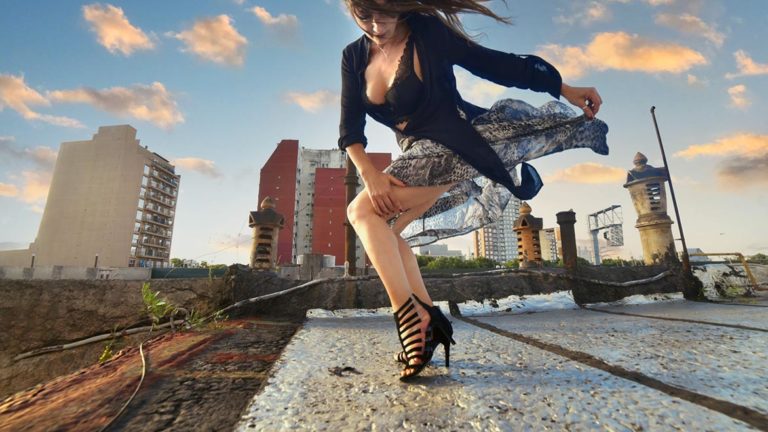


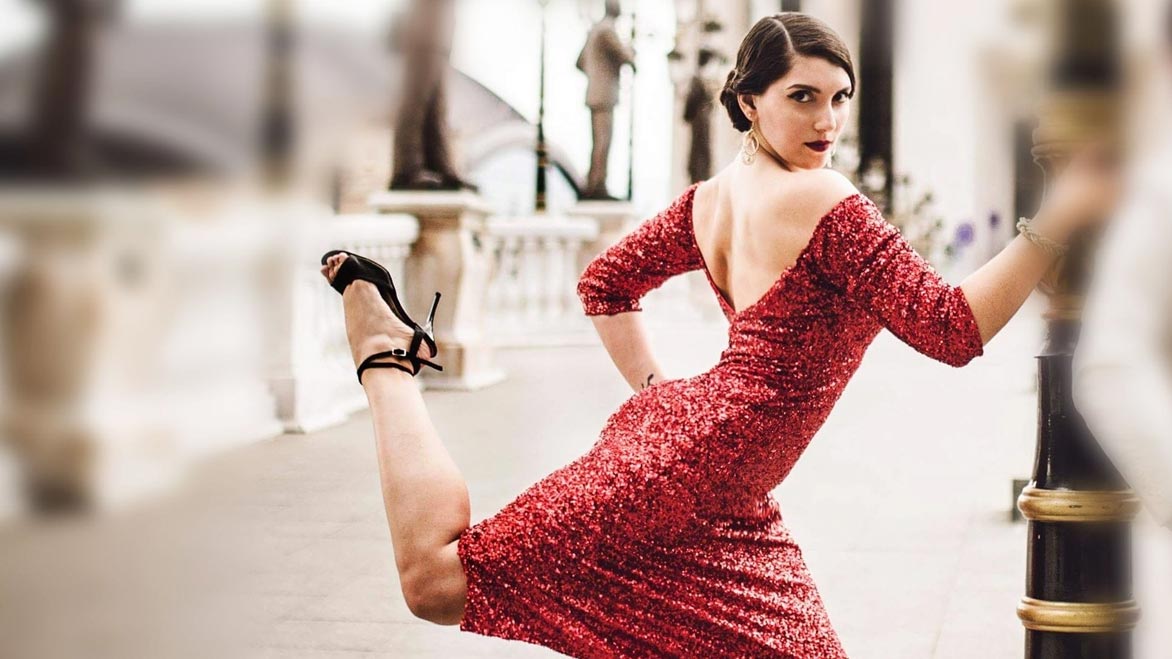
Only in the last 20 years has a particular type of tango shoes for women become so popular that it is now considered typical for Argentine tango: open-front sandals with delicate straps, high, narrow heels, and smooth leather soles. However, it was not always the case that women stepped onto the dance floor in eight-centimeter high high heels. By contrast, tango shoes for men have remained relatively classic.
Women’s tango shoes in the changing world of fashion
If you look back only a few decades, typical women’s tango dance shoes had a closed front and featured heels between four and six centimeters high—rather wide, similar to flamenco shoes.
But high heels and sandal styles are not just a matter of fashion. In Argentine tango, the weight rests on the front part of the feet. It has been found that high heels can support a woman’s dance posture. The tango-typical turns on the ball of the foot are also easier as a result.
An open toe area also has its advantages: the toes aren’t cramped and can spread out, allowing for good grip and a secure stance.

Tango shoes for men
Men’s tango shoes are usually more classic. Black, brown, and gray are popular colors, usually in leather or soft suede. Two-tone models in the combination of black and white, in the Budapest style, or in patent leather embody the elegant dandy. Some manufacturers also offer fashionable models in a sneaker look, with colorful accents for variety.
Here you’ll find a comprehensive description of tango shoes for women and men, also known as followers and leaders, or leaders and followers.

The structure of tango shoes
When someone buys a pair of tango shoes, they’re investing in the equipment for their favorite hobby—or even their profession. Good quality is extremely important here. That’s why you should spend a few minutes finding out what makes a shoe model like that.
All shoes have four components
- the upper (shaft)
- the insole (footbed)
- the outsole
- the heel
The heel is attached to the outsole with glue and nails. Between the insole and the outsole, a joint spring is included to provide support (a piece of metal). The joint spring for tango shoes is shorter than that of sports shoes in order to gain additional flexibility.
Normally, there is padding on top of the insole—but for tango shoes this padding is thicker than for street shoes to provide extra comfort. The insole is attached to the outsole with rubber glue. However, with dance shoes, it is reinforced additionally with nails to ensure structural stability.

Buying good tango shoes
Buying the right shoe model for tango is almost a science—or a form of art. The following tips can help:
- It goes without saying that your tango shoes should be the right size. Make sure your feet aren’t swollen when you try them on.
- Before you buy, make sure the shoes are balanced—you’ll often be standing on just one leg, so test each shoe individually by standing alternately on your left and right legs to see if you still feel secure and grounded.
- You should practice the women’s (follower) steps by walking backward. That’s how you’ll be using them most of the time when dancing the tango!
- Another test is spinning – make sure your dance shoes provide good support.
- Heels come in various heights. In general, beginners should start dancing in lower heels (5–7 cm). A completely flat heel isn’t necessarily helpful here, since it doesn’t support the posture typical of the tango.
- Shoes should fit snugly without restricting blood flow or even causing cramps (which can happen with heels that are too high).
- The most important test is to make sure your foot doesn’t slip and has enough support in your tango shoes.
- The sole should be made of a material that allows for slight rotation – too much pressure, especially on the joints, can lead to injuries.

What else should you pay attention to?
- Regular street shoes aren’t suitable for tango. That’s why you should use proper dance shoes from experienced manufacturers right from the start – for dance class, for practice, and at the milonga.
- When learning to dance the tango, closed-toe dance shoes can be a good choice for beginners, as they offer better protection.
- You should use a shoe bag or a large bag to carry your tango shoes comfortably and keep them protected.
- Insoles can be used if your shoes are a little too big or to provide more comfort and bounce. For example, there are some very good self-adhesive silicone ball pads.
- Tango shoes are usually made of either leather or suede. Leather tends to be stiffer, while suede is more flexible. Fabric is also used for the upper material.
- The heel must be positioned at a right angle beneath the heel of the shoe.
- When wearing higher heels, you tend to slide forward in the shoe while dancing, so there should be good cushioning for the ball of the foot and the toes.

Features of women’s and men’s tango shoes
Argentine tango is emotional and intuitive music. That means that for tango dancers, effortless movement across the floor is crucial in order to establish a good connection to the music and to respond to the partner’s movements.
When tango first emerged from the working-class neighborhoods of Buenos Aires and Montevideo and reached the salons of the upper class in both Argentina and the rest of the world, tango dancers preferred a softer type of shoe, which eventually developed into specially made dance shoes—perfectly suited for dancing to tango music.
Beginners in the world of Argentine tango should make sure their tango shoes are comfortable and offer protection. What matters is being able to move on the dance floor without effort when learning the first tango steps, practicing, and during “social dancing.”
Choosing the right footwear is crucial in order to develop awareness of how your body interacts with the floor. Good tango shoes help you achieve the right dance posture and develop the strength, balance, and confidence needed for a harmonious partnered dance.
If you’ve already been pursuing your hobby for some time, you usually acquire the right “equipment” gradually: suitable tango clothing that doesn’t restrict you is recommended, but good dance shoes are indispensable in tango for performing the typical movements in a relaxed way that is gentle on the joints.

Heel heights for practicing and dancing
Women’s tango shoes are known for their high heels, which can reach up to 10 cm. For beginners, however, it’s usually recommended to stick to a tango shoe model that’s a bit “closer to the ground.” It helps build the necessary self-confidence to maintain a stable body axis during quick movements and elaborate figures. 5 to 7 centimeters is a good choice here.
For practicing for hours—or even for dancing in the leader role—there is an alternative: very comfortable closed women’s tango shoes in a sneaker style. As standard, they usually have a heel height of 3 to 5 centimeters. Truly flat dance shoes with nice designs are also available. Some of these models are also elegant enough for an evening milonga.
Once you’ve learned the basics of Argentine tango, women are encouraged to switch to dance shoes with higher heels, as these allow you to shift your weight more onto the ball of the foot. This supports your dance posture, and the tango-typical turns (pivots) can be executed even more easily while dancing.

Comfort is especially important!
Of course, one of the most important things to consider when choosing shoes is this: you have to feel comfortable in them! The tango shoe shouldn’t be so tight that it causes pressure points or blisters. But it also isn’t advisable to practice in shoes that are too loose. Both men and women spend most of their time dancing close to the floor and keeping their balance on the ball of the foot.
Tango shoes of high quality are made by hand for good reason, which is why their price is higher than that of many shoes produced according to industrial standards. Wearing the right dance shoes—flexible enough to support even smaller movements and turns—is essential for an enjoyable feeling while dancing tango.
Shoes with a leather sole are usually firmer, but they’re more slippery on smooth floors, especially when they’re new. By contrast, a tango shoe with a suede-leather sole offers more grip and flexibility for dancing, but it’s more sensitive and requires more care.
The differences between normal street shoes and shoes made for tango are, of course, much more visible in women than in men. This applies to both appearance and quality and construction.
Argentine tango is known as a very elegant dance, and many female dancers love to wear extravagant and stylish shoe models that match the requirements of their dance.
They should also match the tango fashion or the color of a particular dress. In the evening at the milonga, many women like to wear shoes in silver or gold, because these colors go with almost everything and look like precious jewelry on the wearer’s legs. Playful details are also popular among the dancers.

Foot health
Female dancers must pay particular attention to maintaining the health of their feet, because their movements put stress on the heels and balls of the feet when they execute turns in tango or perform numerous powerful steps in quick succession.
If a dancer starts to experience pain while dancing or existing problems worsen, she should consult a doctor or specialist to choose suitable dance shoes. Some models, for example, are specifically suitable for hallux valgus.
Tango Argentino shoes differ by these features
Fit: The shape is the main feature that determines the shoe. It depends on the last (shoe form) used. There are three basic shapes (narrow, medium, and wide). Fit and size are the most important criteria for finding the best-suited model.
Size: Women’s shoe sizes are usually between 35 and 42 in Europe and Latin America, between 5 and 11 in the USA, and between 3 and 9 in the UK.
Sole: The soles of women’s tango shoes must be thin but strong. In the front area, the sole should be smooth (leather sole or suede-leather sole) so you can turn well, while the arch connecting the heel and toes must provide firm support and still remain flexible.

Joint spring: To keep the heels of your shoes stable and to give the legs stability while walking, a steel spring about ten centimeters long and one to two centimeters wide is installed in a hollow space between the heel and ball-of-the-foot area.
Back cap (heel cap): The heel can be closed or open (slingback). For beginners, it’s recommended to wear models with a closed heel instead of a fully open sandal, because it provides even firmer support.
Front cap: Most women’s tango shoes are open at the front, showing more or less of the toes. However, for the first lesson sessions it may be advisable to start with shoes that have a closed front cap in order to reduce the likelihood of injury. The shoe should fit well around the toes, but not be too tight. The toes shouldn’t be pushed together and should be able to remain in their natural position.
Comfort: Tango shoes must be comfortable, but they also need to provide secure support, because tango can lead dancers into many quick movements and turns. The thicker the padding in the front area, the more comfortable the shoe is. High-quality materials are important here so the padding stays soft for a long time.
Some female dancers prefer to feel the floor directly and therefore do without thick padding. Leather shoes offer more support, but some prefer shoes made of suede leather because they’re especially comfortable.

Information about the heel
Heel: The heel of women’s tango shoes must be very stable, and it must be well connected to the heel cap. Heels that show signs of flexibility should be avoided.
Heel position: It’s very important that the heel of tango dance shoes is located in the right middle of the heel, so that the dancer can distribute her weight evenly between the heel and the ball of the foot. If the weight is distributed more to the front, back, left, or right in any way, the likelihood of injury increases for the dancer.
Heel height: The total height of the heel is measured from the floor to the point where the inner sole meets the top of the heel. Heel heights for women’s tango shoes usually start at 5 cm, but most modern tango shoes are made with a height of 7, 8, or 9 cm.
Women’s dance shoes
You can also get more specific information about the topic of women’s dance shoes for tango, salsa, or Latin on the websites of the respective shoe manufacturers.
Men’s dance shoes
For men’s dance shoes, just like for women’s dance shoes, there are numerous pieces of information on the websites of the shoe manufacturers, where you can find further details. Also, men’s tango shoes differ significantly in their construction from normal street shoes!

Video: Natasha Lewinger dances in tango shoes by Alagalomi – with Haris Mihail
On the internet you’ll find dance shoes in a wide selection
- Tango Schuhe der Marken Alagalomi, Paso de Fuego, Tango Leike,
Tangolera, Madame Pivot, Regina, Sur, Comme il faut und viele mehr - Shoes for many other dances, such as salsa, bachata, kizomba, standard, and Latin
- Dance shoes in classic colors such as black, gold, and silver
- wide variety of colors, designs, and materials
- Closed-toe tango shoes
- Leather Dance Sandals for Tango
- Tango shoes with high heels or flat heels
- The right fit for every foot
- Women’s Shoes and Men’s Shoes
- Tango shoes with leather soles or suede soles
- the right dresses, skirts, tops, and dance pants
- Bags, Shoe Bags, and Accessories
Many tango shoe manufacturers also visit milongas, festivals, or encuentros to offer their shoes there “live.” Here you can try them to your heart’s content and find your favorite models!
Links to the websites of the tango shoe brands shown here:
***
Cover image and other images from Alagalomi: Keith Elliott, model Natasha Lewinger.
Other photos: Thomas Lackner, Paso de Fuego, Tango Leike, Karin Lüders
***