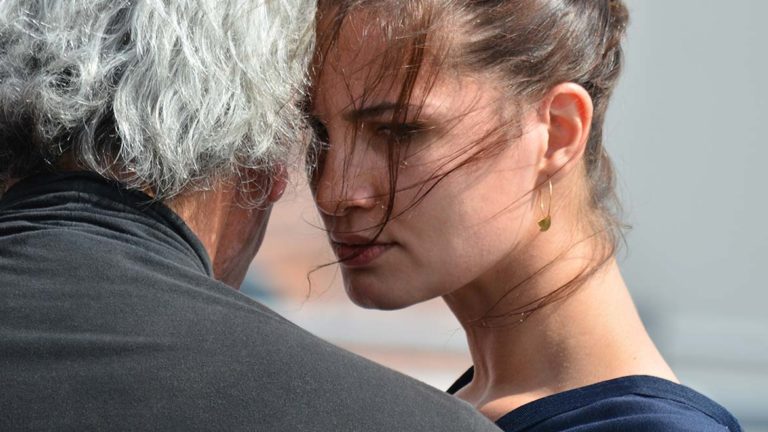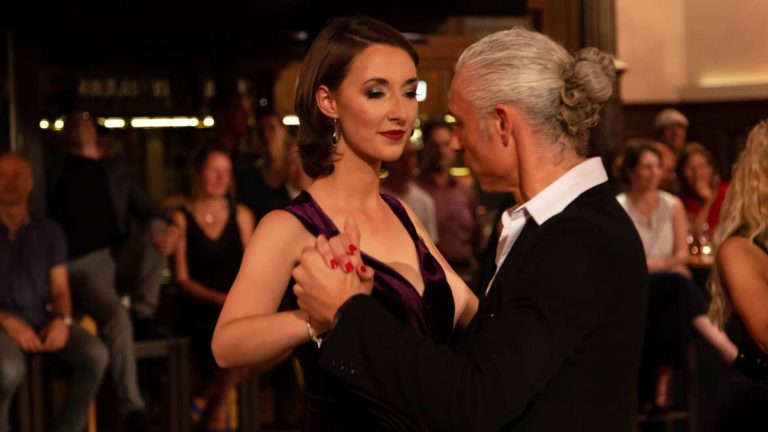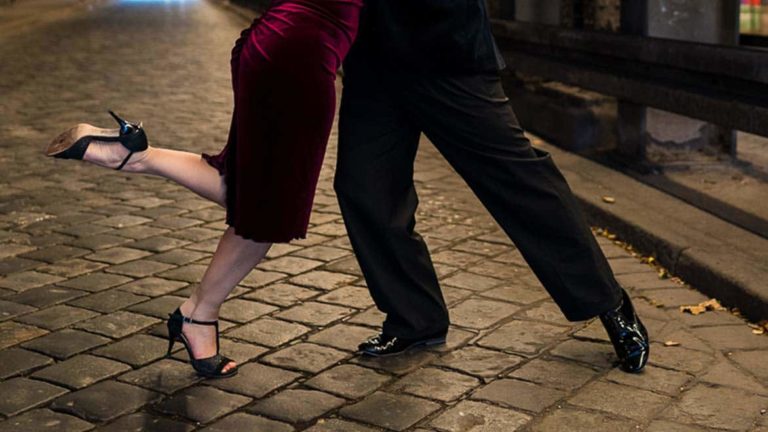


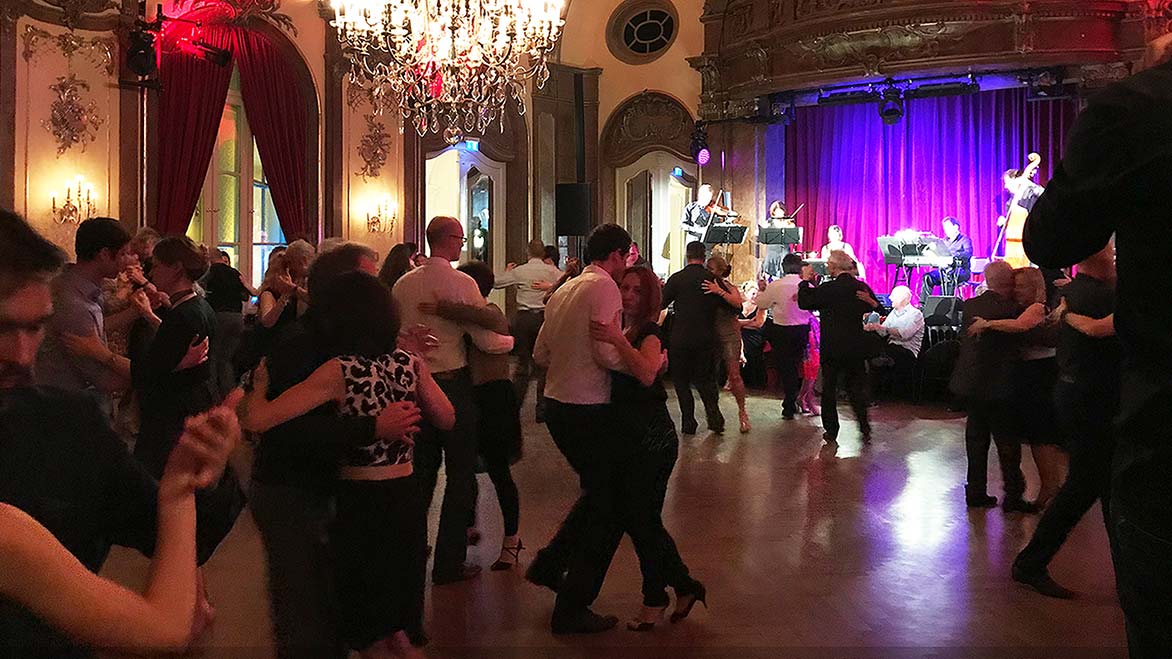
So what does “Milonga” actually mean? The word “Milonga” has two meanings: On the one hand, it refers to the typical dance event for Argentine Tango, where dancers of all levels meet. On the other hand, Milonga is the name of a special music style of Tango: its folk-like and rhythm-focused predecessor—and the associated dance style.
What can I expect at a Milonga?
At a Milonga, the typical dance event for Tango Argentino, dancers go to dance the three rhythms: Tango, Vals and Milonga (here: music style). Dancers are also called Milongueras (ladies) and Milongueros (gentlemen). Each style has three to five pieces that form so-called Tandas, separated from each other by short musical breaks—Cortinas. The music is either played by a tango DJ or performed live.

Milongas have existed since the time Tango was first taking shape. In Buenos Aires, they were cheerful get-togethers in simple venues, where the neighborhood would meet every week. Of course, there were also elegant dance balls where Tango was played—whether in Buenos Aires, Paris or Vienna. But these were special events, where people dressed up for the occasion.
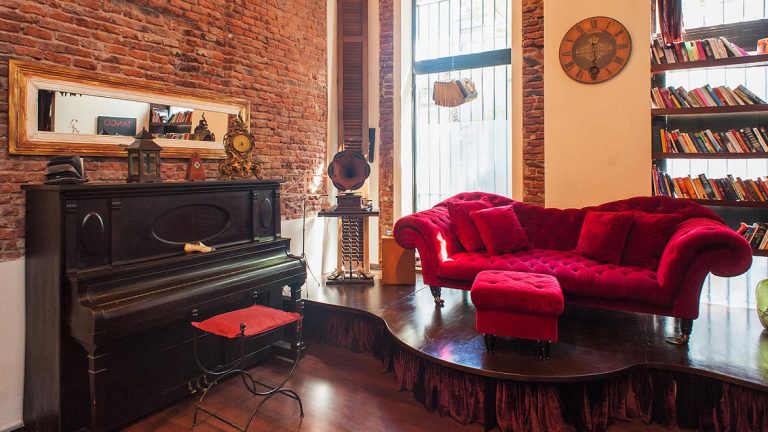
Today, Milongas can take place almost anywhere there’s room: in splendid historic halls, former factory halls, or lofts, in parks or on public squares, in pubs, hotels, or backyard studios. Depending on the atmosphere, the dress code ranges from elegant to casual.
The flow of a Milonga is organized by rules—Códigos—which can differ significantly from one event to another (see also Tango lexicon). A special form of a Milonga is the Practica, a pure practice Milonga. Here, dancers of all levels meet to practice and experiment informally; new figures are also developed. The “etiquette” isn’t as important—less formal dance fashion, and the music is usually not divided into Tandas.
Encuentros, marathons and festivals
Multi-day Tango events such as Encuentros, festivals and marathons are becoming increasingly popular. Here, a program featuring several milongas in a row is offered. Well-known show pairs perform, you can attend Tango workshops, and there’s usually also live Tango music.
These events require a higher level of dancing. You need to register, and many visitors travel from far away. That gives them the chance to dance with unfamiliar dance partners from a wide variety of backgrounds. This is how Tango Argentino stays exciting!
Proven rules of the game for the Milonga dance floor
In a traditional Milonga, chairs and tables are arranged around the dance floor. People are invited to dance without words—through eye contact—Mirada—and the approving nod of the head—Cabeceo. As a rule, the man invites the woman.
At the end of a Tanda, you thank your partner and say goodbye. The gentleman doesn’t leave the woman standing on the dance floor—Pista—but leads her back to her seat.
The Cortinas (short musical interruptions of the Tandas) primarily serve to change partners. Separating while a Tanda has not yet finished—or even before a piece ends—is considered discourteous.
Nowadays, these customs are viewed more loosely, especially in Europe. You can also ask each other to dance with words, and women can absolutely ask a potential partner themselves. At some milongas, there are no Tandas and Cortinas; instead, the music simply plays continuously.

Dancing harmoniously together
However, one thing always holds true: dance with consideration and avoid collisions with other couples! Traditionally in Tango, the man leads and the woman follows—though today it’s also common to simply talk about “leaders” and “followers,” since the roles can be reversed. Women lead and men follow; women dance with women and men with men.
Especially the latter even corresponds to old Argentine tradition. First, the men wanted to learn to dance among themselves before presenting their skills to the ladies. With the well-known lack of women among the first generations of immigrants, they wanted to make a good impression right away!
Popular milongas in Germany
Milongas are held regularly in all major cities in Germany, so you can go dancing Tango almost every day. Here we present a small selection of popular milongas. Otherwise, we recommend the general Tango calendars or city information pages where you can find details about local milongas.
Friday Milonga, Berlin
Every Friday at Nou Tango. Large dance floor with lots of seating, rotating DJs, 100% traditional. Central in Berlin Mitte. Website
La Yumba, Hamburg
Nice hall in St. Pauli. A comfortable atmosphere, parquet floor, traditional with rotating DJs. Every Friday and every second Sunday. Website
Tango Maldito, Munich
Every Friday in a beautiful, spacious hall with a good parquet floor. Featuring a rotating lineup of DJs. Traditional tango. Website
 Milonga Suerte Loca, Munich
 Friday Milonga at Nou, Berlin
- La Yumba, Hamburg
- Tango 8, Cologne
- Milonga de los Domingos, Munich
- The Beautiful Friday, Berlin


Tango 8, Cologne
Well-designed hall with wooden floor. In summer, an outdoor dance floor. High level of dancing. Milongas every Friday and every Sunday. Website
Milonga de los Domingos, Munich
In the Johannissaal at Nymphenburg Palace. Traditional tango, a good parquet floor, atmospheric lighting and occasional live music. Every Sunday. Website

A small Milonga etiquette guide
- At a milonga, you dance alongside the other couples, not just with your own partner. Here are a few tips for sharing the dance floor harmoniously:
- Follow the direction of dance: always move counterclockwise around the floor.
- Do not step backwards against the direction of dance. The couple behind you will not expect it, and a collision could result.
- Keep the dance flowing: do not stop unnecessarily for long. Move forward when a larger gap opens up.
- Stay in your lane rather than zigzagging: there are two lanes around the outer edge of the floor. The centre is reserved for beginners or performance couples.
- Avoid overtaking if possible. Match your pace to the other couples. If you must pass, do so only on the left.
- When the dance floor is crowded, avoid high Voleos or Ganchos; they could injure other dancers.
- The more crowded the milonga, the smaller your movements should be. Avoid expansive dancing and, if possible, stay in a close embrace.
Milonga photographers
As more and more photos of milonga visitors are being shared on social media, event organizers are also increasingly interested in having their events documented by professional photographers. Some photographers, often themselves Tango dancers, have specialized in this—here’s a small selection with information and contact details.
Ishka Michocka Thomas Lackner Chauveau Photography


Chauveau Photography
Lives in Antwerp, passionate Tango dancer and often seen at international Encuentros. Facebook
Thomas Lackner
Lives in Munich, specializes in theatre photography and finds Tango dancing inspiring as a photo subject. Website
Ishka Michocka
From Poland, currently lives in Ibiza and dances Tango herself. Professional photographer who has already had many international exhibitions. Website
***
Cover photo: Karin Lüders, more photos: Preillumination Seth (Unsplash), Andrey Free (pxhere), Chauveau Photography
***