

Our blog at a glance: In the categories “Music” and “General” you’ll find useful information about tango dance and tango music. You’ll also learn about the development of Tango Argentino from its beginnings to the present day, about Milongas, tango schools and much more. The “Fashion” category covers all aspects of tango dance clothing.
On this blog, you’ll find answers to (almost) all your questions about Tango Argentino. What does this term even mean? What’s typical about it and what’s its origin story?
The topic of classes is also covered in detail. Where can I learn tango dance? What can I expect at a tango school? What makes a good tango teacher? How do you move forward without a permanent dance partner? What does the word milonga mean? This beginner guide is complemented by our lexicon with the most important terms from the tango world, from A to Z.
In addition, the blog covers current live orchestras and DJs. You’ll also find many tips and links to interesting websites, films, magazines and books about the Argentine dance and its music—for anyone who wants to deepen their knowledge.

Tango Argentino—what does it mean?
What distinguishes Tango Argentino from standard tango? In the blog post “What exactly is Tango Argentino?” you’ll learn what its most important characteristics are. One of them, for example, is that Argentine tango dance is danced freely with improvisation, while standard tango is danced according to fixed steps and rules. But Tango Argentino is far more than just a dance. It’s its own independent music genre known all over the world. Even the tango texts have their own poetry worth discovering. In short: everything you’ve ever wanted to know!
The origins of tango
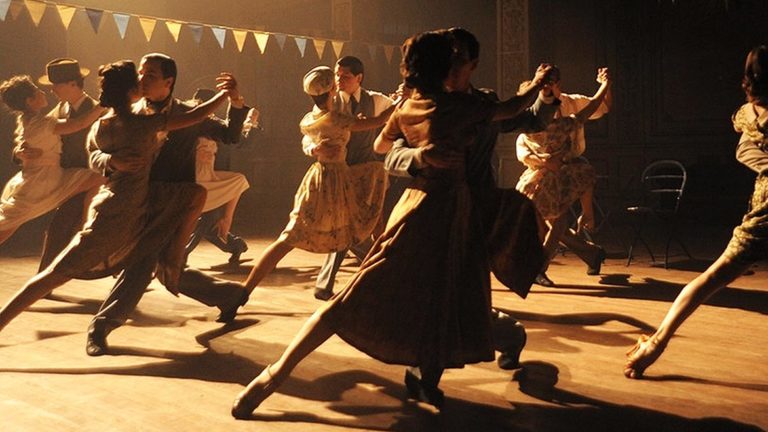
How did tango dance and its music develop? The story begins around 1900 in the Río de la Plata estuary area, where tango developed in the cities of Buenos Aires, Rosario and Montevideo. Already in the 1910s, the dance was popular there. Soon after, it also became fashionable in Europe.
The 1930s and 1940s are considered the golden age of tango. People danced to major live orchestras and countless records were recorded. From 1960 onward, tango culture then almost came to a standstill for two decades. But there were dancers and musicians who kept it alive. Astor Piazzolla developed Tango Nuevo, which had many followers among jazz fans. In the early 1980s, interest in tango picked up again when a spectacular tango show went on tour. Since then, the number of tango fans has been constantly growing, and thanks to YouTube, the dance has spread to all continents in 2020.


How can I learn tango dance?
How do you find the right tango school? What can you expect from good instruction? It should be clear from the start that you learn solid basic technique. This is an important prerequisite for free improvisation—and therefore for enjoying tango dance! Memorized figures aren’t the focus; what matters is learning the tango’s body language, which is understood internationally. Walking in a close embrace is one of the most important foundations.
What course options are there?
There are tango classes, workshops or private lessons for all levels, in which you learn the elements of the dance. They are offered for beginners, intermediate or advanced dancers. No matter how old you are—even without any prior dance experience—anyone who can walk can learn tango dance! Even musicality and a sense of rhythm can be practiced in class. You just need a little openness and patience. What else you need: tango shoes with leather soles and flexible clothing. You can find inspiration for this in our blog posts about fashion!
In tango instruction you do learn step combinations or figures, but above all you learn posture, so you can move calmly and musically. It’s important that you can improvise at any time. In a tango course or workshop, teachers usually recommend dancing with different partners in order to develop a feel for communication as a couple.


What is a Milonga?
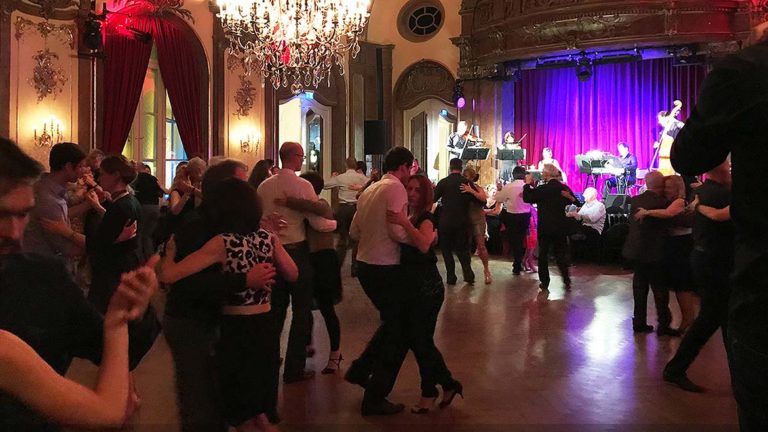
The word has two meanings: On the one hand, it refers to a dance party for Argentine tango, where dancers meet to dance together. On the other hand, it is the name of a special music genre of tango: its rhythm-focused predecessor and the matching folk-style dance.
Where can I go dancing tango?
Milongas take place regularly in all larger cities, so you can go tango dancing almost every day. Often, there are also classes or workshops right beforehand. A small selection of popular milongas can be found in the blog post “After the milonga is before the milonga”. Otherwise, we recommend the general tango calendars of the cities, where you’ll find information about local milongas.


Tango music live or from the DJ
Here you can find out about today’s tango music. We present the current orchestras, duos or soloists who often go on tour and fill the dance floors with their repertoire. At milongas and other events, they create a particularly authentic atmosphere with their live music. Some of these groups have already reached cult status. (Info about the orchestras of the previous century: see Tango lexicon.)
In addition, we introduce you to well-known tango DJs—for good-humored Tango Argentino music at every event. Whether it’s a local milonga, a marathon, a festival, an Encuentro or a private party: there’s a suitable DJ for everything, bringing guests onto the dance floor with selected tangos!
Listen to samples with our Spotify playlists
On the music platform Spotify, we put together several playlists at the beginning of 2020 that you can access anytime. Here you’ll find tangos, milongas and valses in all styles, from traditional to electrotango. There’s also a playlist with Argentine folk music, which has become increasingly popular in Europe in recent years. It’s worth having a listen!


Lexicon of tango terms
Do you want to understand the tango language? Anyone who gets into tango dance hears many Spanish terms for dance steps, music styles or customs. Many words can’t be translated into English that easily. That’s where our small tango lexicon helps you: it translates and explains the most common terms. From A like Abrazo (embrace) to Z like Zapatos (shoes).
Here you’ll also find some of the big names in tango culture. It’s about the most famous musicians, composers and orchestra leaders—especially from tango’s golden age. At that time, there were about 600 tango orchestras alone in Buenos Aires! These personalities shaped tango music decisively. They created many wonderful tangos that are still hugely popular today.
Special: Argentine Spanish
Maybe you’d like to deepen your knowledge of Argentine Spanish? Many dancers want to understand the tango lyrics or be able to talk better with tango teachers from Argentina. Argentine Spanish (more precisely: Spanish from the Río de la Plata) differs significantly from the European version. So it’s worth looking for a teacher who specializes in it.
Photos: Chauveau Photography, Thomas Lackner, Unsplash, Stockvault