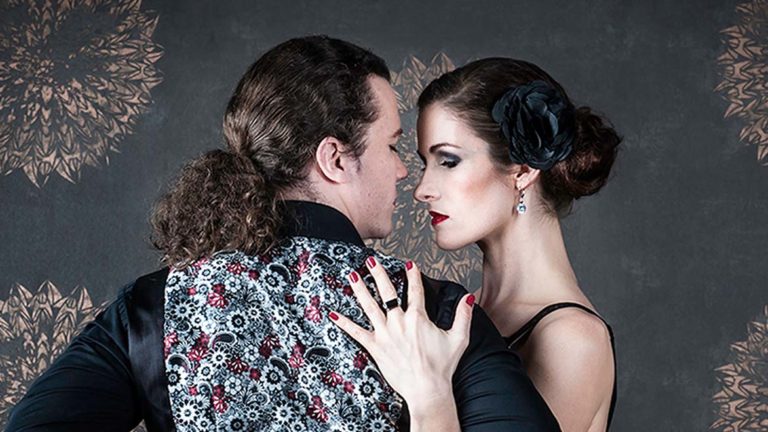


For many beginners, the first question that arises is what Argentine tango actually means. What distinguishes it from standard tango—the European, international, or ballroom tango?
Interesting facts about the Argentine dance, its music, and poetry
Argentine tango is a free and highly individual improvisational dance. In contrast, standard tango is danced according to fixed steps. It follows the rules of the European or international competitive dance program.
Argentine tango, on the other hand, is a dance of the people. Competitions, as in standard dances, are not important. They remain more of an exception, as they do not really correspond to the individual nature of Argentine tango.
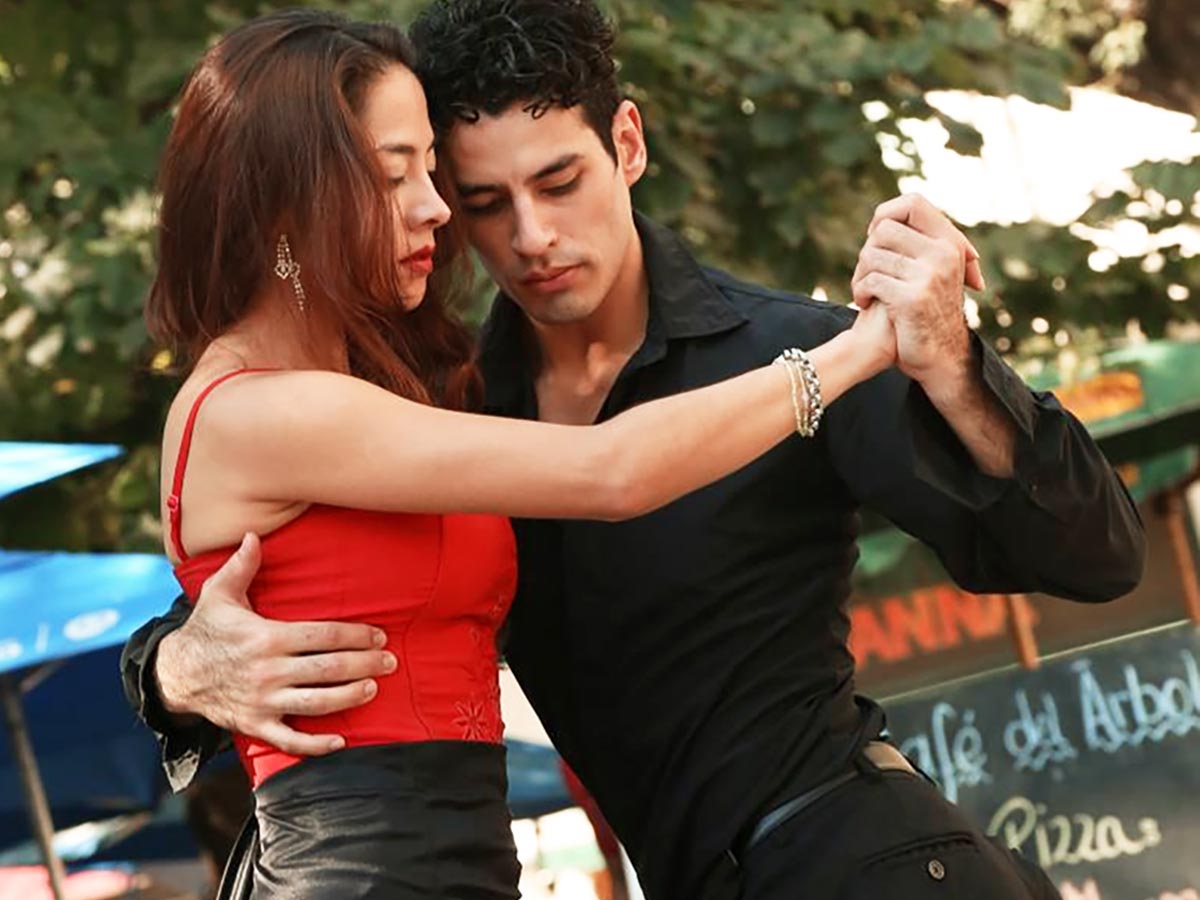
But Argentine tango is far more than just a dance. It is also an independent genre of music for which Argentina is known throughout the world. In addition, tango has a distinctive poetry that is often sophisticated and linguistically interesting. Many lyrics are written in “Lunfardo,” the dialect of the former criminal underworld of Buenos Aires. This slang, which is still commonly used, has adopted many words from the Italian language.

Tango Postcard from 1910 Street Tango in Buenos Aires around 1900 Carlos Gardel dances in a feature film Orchestra Director Juan D’Arienzo


From Heart to heart
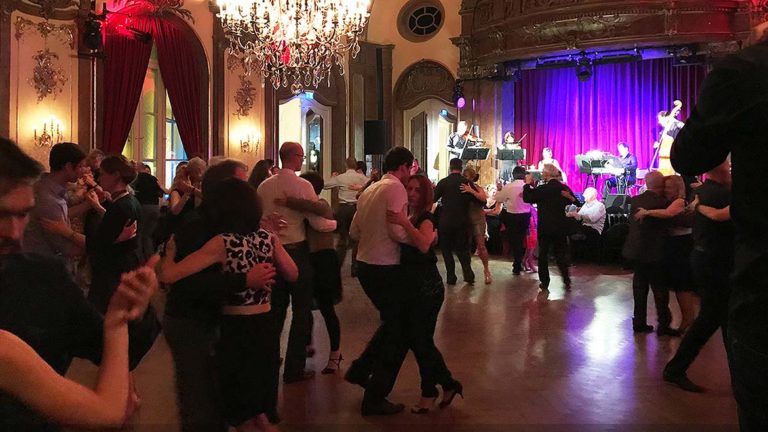
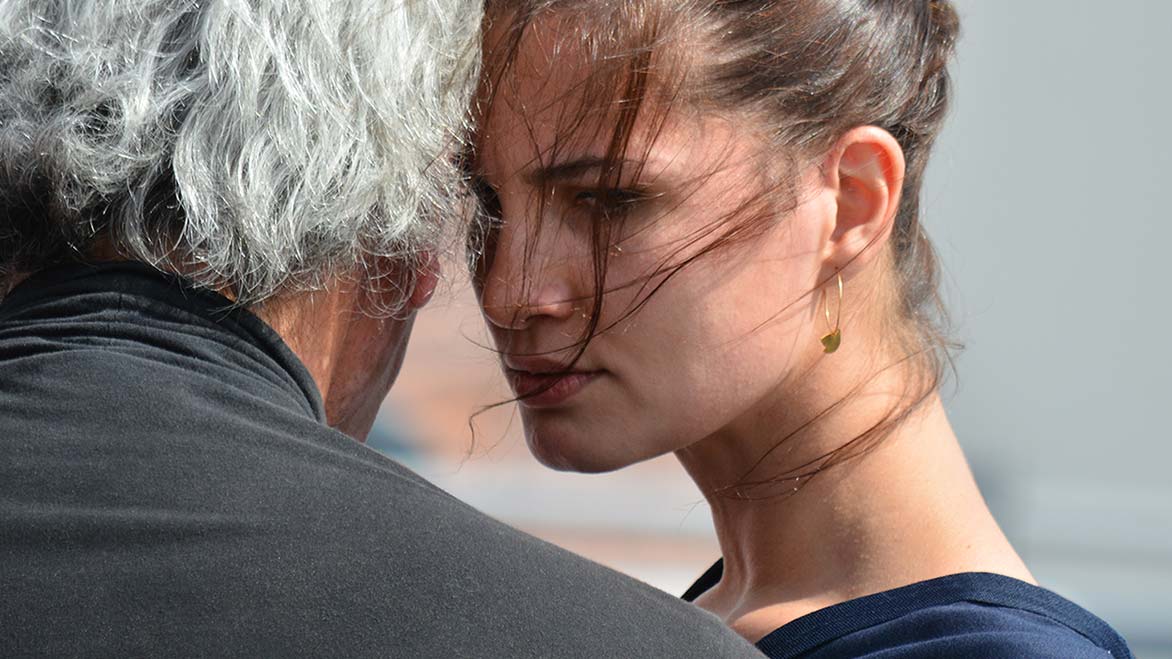
The dance “Argentine tango” is based on the body signals of leading and following. The lead comes from the chest rather than the arms. From heart to heart (de corazón a corazón), as they say in Argentina. No fixed choreographies or combinations of steps are danced. This makes tango endlessly varied and exciting.
There is, of course, also the stage tango variety (Tango escenario). This is primarily intended to entertain the audience. It often features spectacular acrobatic figures influenced by classical ballet or modern dance. Rehearsed choreographies are necessary here, especially when a group of dancers is to dance in sync.
What amateur or professional dancers celebrate on the dance floors of public milongas (dance events) when dancing Argentine tango is generally pure improvisation.
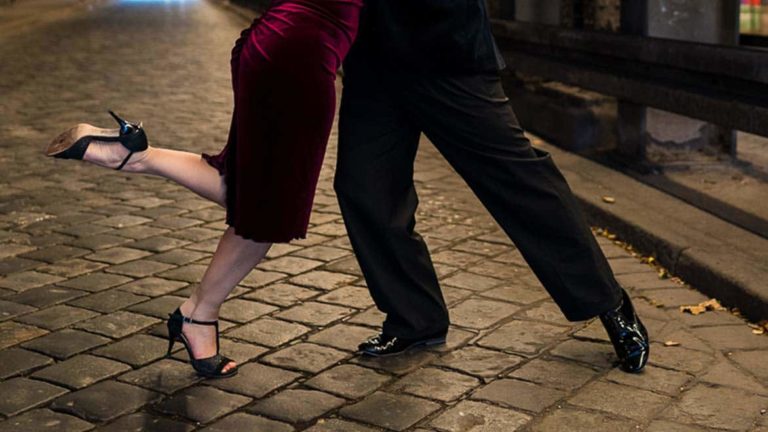
One dances differently with every partner, in every mood, and to every piece of music. The steps are elegant, and the upper bodies are usually connected in a close embrace. The lower bodies and legs, on the other hand, do not touch, except in certain figures. The embrace and harmonious walking as a couple are the foundation of Argentine tango. The dancers perform a wide variety of figures, but in between they always return to simple walking. You can find more about typical Argentine tango figures in our Lexicon of Tango Steps.
Tangodanza – Magazine for Argentine Tango
In the magazine “Tangodanza” you will find fascinating reading, as well as plenty of interesting and inspiring information about Argentine tango! The magazine is published four times a year.
Tangodanza 4/2020: Portrait of the tango-teacher couple Constantin Rüger and Judith Preuss


The Origins of Argentine Tango
Anyone who wants to learn and dance Argentine tango soon becomes interested in the history of this fascinating dance. It originated around 1900 in the vast estuary of the Río de la Plata. Argentina’s major cities Buenos Aires and Rosario, as well as Montevideo, the capital of Uruguay, are located here. The correct name would actually be “Tango ríoplatense,” or tango from the Río de la Plata.
Melting Pot on the River
Millions of immigrants from all over the world, especially from Europe, arrived in the three major port cities at that time. Most of them were Italians and Spaniards; many French, English, Germans, Russians, and Poles also came.
They all brought the music of their homelands with them and fused it into a new musical genre, the tango of the Río de la Plata. It was also strongly influenced by the African population that had lived there since the days of slavery. Styles such as Candombe, Canyengue, and Milonga emerged. They are considered precursors or early forms of tango.
Where Does the Word Tango Come From?
The word “Tango” probably comes from Africa and means “drum.” However, there are various theories about this. When listening to tango music today, one can still empathize with the homesickness, melancholy, and longing of the immigrants that resonate from the melodies and lyrics.
The Influence of the Italians
The group of Italian immigrants in particular contributed greatly to the emergence of Argentine tango. Even today, most tango musicians, composers, and poets have Italian surnames. The Italians integrated melodies from Neapolitan songs, followed by influences from the Viennese waltz, polka, foxtrot, habanera, and other styles.
The Sound of the Bandoneon
Eventually, its entirely unique, characteristic sound took shape. This sound is also defined by the bandoneón, a harmonica instrument of German origin. It resembles an accordion, but has buttons on both sides instead of keys. The bandoneón is considered difficult to learn and became a symbol of tango. It gives the music its particularly melancholic expression. Over time, the most frequently danced and played musical and dance styles developed: tango itself, vals (tango in waltz time), and milonga, a fast, rhythm-focused variation.

Aníbal Troilo, one of the most famous bandoneonists and composers Tango Icon: Tita Merello, Beloved Singer and Actress Tango Legends: Fresedo, Razzano, Troilo, Canaro, Santos Discépolo, 1944


The Golden Age – the Época de Oro
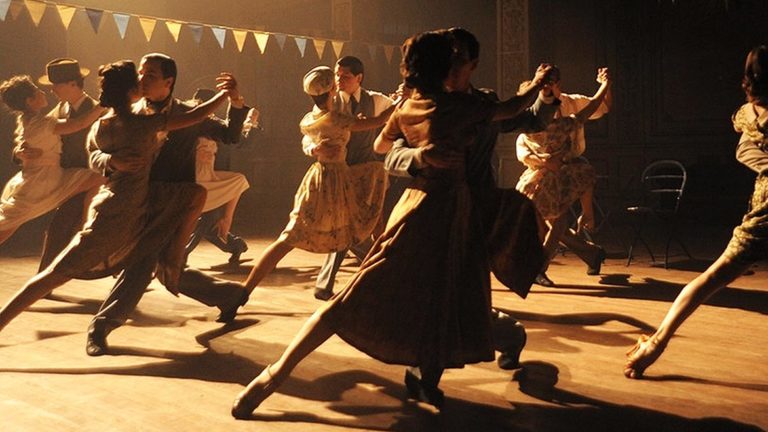
Tango was already popular in the 1910s and 1920s. But the period from the mid-1930s to the late 1940s is considered tango’s golden age (Época de Oro). A great variety of orchestras emerged, and thousands of compositions and lyrics were written. The orchestras recorded countless records. Argentine tango was played live everywhere and became famous worldwide as a social dance. It became the dance craze of the hour, in Buenos Aires as well as in Vienna, Paris, Berlin, Tokyo, and Helsinki. For a time, tango dancing was banned by the pope because it was considered too erotic. However, this did little to diminish its popularity!
The Big Four of Argentine Tango
Juan d’Arienzo, Carlos di Sarli, Osvaldo Pugliese, and Aníbal Troilo are considered central figures in tango. They were the four great orchestra leaders of that era. They composed many successful tangos and gave their orchestras (Orquesta típica) an unmistakable sound.
More names of the most famous musicians and orchestras can be found in our tango encyclopedia. First and foremost is the Argentine singer and national hero Carlos Gardel, who was the first to popularize sung tango throughout the world. Later, he also shone as an actor in several tango films.
A Time of Change and Tango Nuevo
After the Época de Oro, further creative decades followed. Toward the end of the 1950s, however, tango gradually lost popularity as rock ’n’ roll and pop music emerged and displaced it. Young people preferred dancing to the new rhythms. The composer and bandoneon player Astor Piazzolla once again gave Argentine tango new impulses and transformed it into concert music. Many jazz fans were enthusiastic about his “Tango Nuevo.” The Argentine people, however, were divided in their opinions, as his compositions were considered unsuitable for dancing. Today, his achievements are also highly esteemed in his own country.

Time of the Siesta and New Beginnings
During the dark period of the Argentine military dictatorship from 1976 to 1983, tango culture almost came to a complete standstill. Public gatherings were prohibited, including dance events. Nevertheless, a core group of dancers and musicians kept tango alive.
A Time of Renewal
From the mid-1980s onward, tango experienced a renaissance. The Argentine stage productions “Tango Argentino” and “Tango Pasión,” featuring tango icon Alejandra Mantiñan, toured the world and found enthusiastic followers. Suddenly, many people once again wanted to learn to dance tango and take lessons. Argentine tango dance schools were founded, and workshops and courses were offered. Young Argentine musicians learned to play the music of their grandfathers. Soon, public milongas (tango dance events) were being held again. The new tango wave spread around the world, much as it had decades earlier.
At the beginning of the 2000s, a new musical genre became popular: the Paris-based Argentine exiles of Gotan Project invented “electrotango” and released the CD “La Revancha del Tango.” It became a worldwide success and soon secured a permanent place in all the club charts. This multiplied worldwide interest in Argentine tango.
Electro- and Neotango
Other bands such as Otros Aires and Bajofondo followed the new style. The dance was also further developed to match the modern sound. People danced “neotango” or “Tango Nuevo”, which is characterized by expansive, flowing movements and often abandoning one’s own body axis.
This created an entirely new expression of the dance. The Argentine dancer Chicho Frumboli developed many neotango figures and has since been considered an icon of this style.

Argentine Tango Today
In the meantime, neotango and electrotango are no longer as common at milongas, especially in Argentina. The local tango scene is returning to its roots, namely traditional tango. More importance is again being placed on the traditional “Códigos de la Milonga”, the rules of conduct for harmonious interaction between couples on the dance floor. The expansive movements of neotango had proved disruptive in this regard. Nevertheless, many elements of neotango have flowed into the dance. Today, they are simply performed in a somewhat more subtle and refined manner.
Styles of Argentine Tango
Other Argentine tango styles that are danced today and also blended with one another include Tango de Salon, Tango Milonguero, and Canyengue—more information can be found in our Lexicon of Tango dance steps.
In recent years, young tango orchestras and musicians have won many fans with new interpretations of traditional tangos and their own compositions. On their travels around the world, they have found a loyal and constantly growing audience. These include, for example, Sexteto Milonguero, Orquesta Misteriosa Buenos Aires, Orquesta Romántica Milonguera, La Juan D‘Arienzo, Carlos Quilici, and Cuarteto Mulenga. European ensembles such as Bandonegro have also developed a growing fan base with their fresh versions of the classics.
Worldwide Spread
Today, you can dance tango outside Argentina in almost every major city in the world. Thanks to the media distribution of tango videos, you can find a milonga or attend a course even in remote places. People also meet at festivals and marathons to share their passion for dancing. There are also so-called encuentros, where tango dancers at a high level meet.

Reading and Films about Argentine Tango
Tango Encyclopedia Todo Tango
Anyone who would like to learn more about Argentine tango is recommended to visit the Todo Tango website: an encyclopedia in English and Spanish where you can learn everything about musicians, orchestras, tango titles, lyrics, and more.
Article about Códigos
On the Pagewizz author portal, dance teacher Fabián Lugo published the article “Dancing Tango with Style” about the Códigos de la Milonga (milonga rules). Here you can learn more interesting details about etiquette in the world of tango (in german language).
Tango Film Nights
Ralf Sartori, one of Germany’s tango pioneers, screened over 70 different tango films over the course of 13 years, alternating between two movie theaters in the Munich area. Unfortunately, he passed away suddenly in April 2026, but his regular tango film nights—featuring a post-film milonga at Schloss Seefeld—as well as tango film screenings at the Kino Breitwand Gauting, are set to continue under the direction of Jenny Baehr.
Contemporary Films
- “Tango Lesson” by Sally Potter, starring Pablo Verón
- “Assassination Tango“ with Robert Duvall
- “12 Tangos – Adios Buenos Aires” by Arne Birkenstock, music by Luis Borda
- “The Last Applause” by Germán Kral
- “Our Last Tango” by Germán Kral
- “Tango Libre” starring Chicho Frumboli
Nonfiction Books
- “Tango“ by Horacio Salas
- “Tango Stories” — Portraits of Musicians by Michael Lavocah
- “Tango—Denial and Grief” by Dieter Reichardt
- “Tango – the Unifying Power of the Dancing Eros,” Ralf Sartori
- “Tango Global”: A Worldwide Book Series on the Argentine Dance, by Ralf Sartori
Films from the Golden Age
- “Las Luces de Buenos Aires“ with Carlos Gardel
- “Tango Bar“ withCarlos Gardel
- “El Tango en Broadway”, also featuring Carlos Gardel
Novels
- “Tango in Heaven” by Elsa Osorio
- “Three Minutes with Reality” by Wolfram Fleischhauer
- “The Tango Singer” by Tomás Eloy Martínez
Magazines
- Tangodanza (German tango magazine)
- El Tangauta (spanish)
- La Milonga Argentina (spanish)
Tango Equipment
As a tango dancer, you need suitable shoes in addition to appropriate clothing. There are more and more suppliers of tango-shoes specially developed for the dance. You can also find many manufacturers of suitable and elegant dancewear.
***
Cover photo: Pixabay, additional photos: Thomas Lackner, Mikael Holber (Tangodanza)
***